Challenges of Vocational Nursing Education
Thoughts and Impressions from This Year’s NordYrk Conference
11.06.2026
In his opening keynote, Stephen Billett gave an overview of concepts of practical learning. Questioning conventional understandings of schooling, he locates the theory–practice gap in the separation of learning from the circumstances of practice. On this account, work is characterised by inherent moments of learning. Nursing handovers, for example, are pedagogically rich activities. It is striking that nursing — although a subject of higher education in many countries rather than, or alongside, vocational education — serves here as an example of practical learning within the discourse of vocational education.
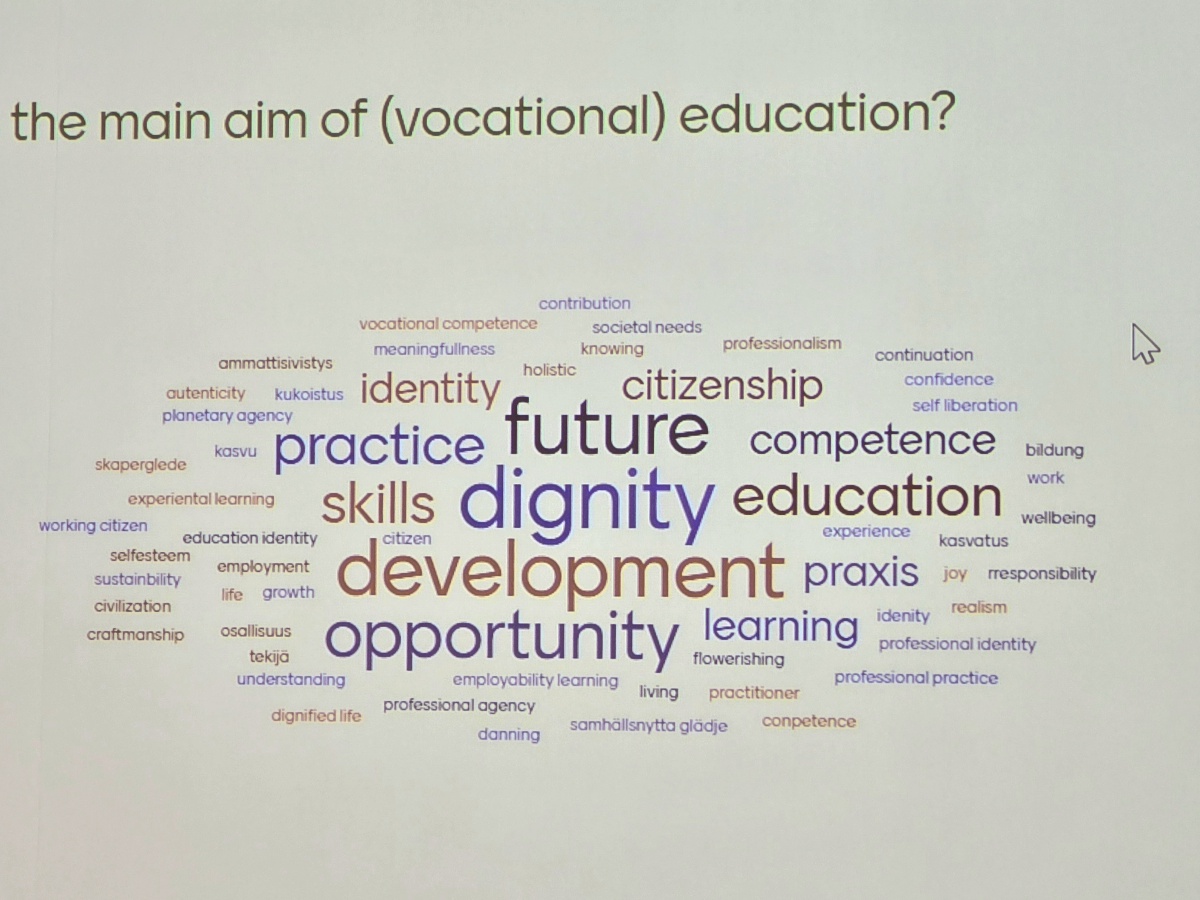
In the second keynote, Hannu L. T. Heikkinen widened the focus of vocational education towards the complexity of the contemporary world. Criticising the “learnification” and “competencification” of an education geared towards jobs and markets, he foregrounded subjectification — the process of becoming a desirable self. In doing so, he offered a concrete and comprehensive approximation of what education might mean for the present world. This broader focus had also emerged among participants during the initial brainstorming on the aims of vocational education.
Our own contribution presented the findings of the scoping review conducted within the BiLeP project, commissioned and funded by the German Federal Institute for Vocational Education and Training (BIBB). In doing so, we offered a perspective on nursing education from a country in which it is located predominantly within vocational education. Like ours, many presentations at the conference addressed the current challenges facing teachers in VET. I would highlight, for instance, the contribution by Sini Bask, Chris Zirkle, Petja Sairanen and Olli Vesterinen — a European–American comparative analysis of the professional development needs of VET teachers in Finland and Ohio. Alongside AI, they underlined the importance of collaboration and sharing, digital pedagogy, differentiated instruction and inquiry-based learning.

Our research likewise identifies digital competence as a challenge for nursing educators. With respect to the typical career pathway in Germany — where nursing teachers first qualify as nurses before becoming educators — we also uncovered role tensions between an educational identity and the practical profession for which students are being prepared. These include the pressure nursing teachers perceive to perform as near-perfect nurses, as well as the ambiguity between educational responsibility and clinical practice. In this way, as Billett observed in his opening keynote, one might claim that nursing education produces a theory–practice gap of its own.
This is the presentation Wolfgang von Gahlen-Hoops and me showed during the conferende. Other participants of the BiLeP-Team are Daniela Thomas, Tobias Tirtey, Pia Goetze, Tanja Lehnen, Roland Brühe, Frank Arens and Robert Wietzke.
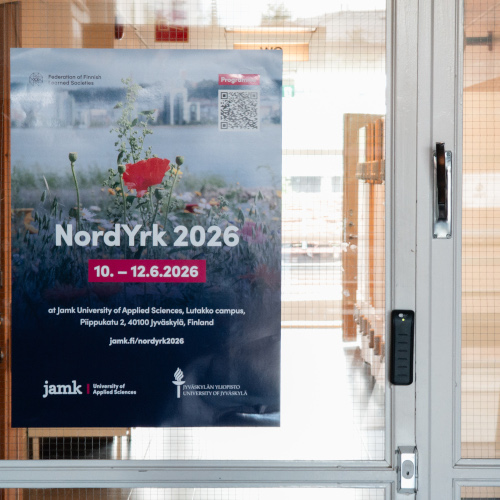
The NordYrk conference on research in vocational education ran from 10 to 12 June 2026 at JAMK University of Applied Sciences in Jyväskylä, Finland.